
Mindset and Emotional Balance: Understanding What Shapes Us From Within (Copy)
Mindset is often described as a way of thinking, but it goes deeper than that.
The mindset is a set of mental patterns and beliefs that shape how we make sense of the world and ourselves. It influences how we think, how we feel, and how we behave in any given situation. What we believe about ourselves—our capacities, our limits, our worth—directly impacts how we move through life, and ultimately, what we create or avoid.
Because of this, mindset is often approached as something to change through force, blame, or shame. Yet when we look more closely, we see that our mindset is not only built in the mind. It is shaped through experience, reinforced through repetition, and often maintained without our conscious awareness.
Understanding this opens a different way of working with mindset—one that includes the body, emotions, and lived experience.
Mindset Is Not Just Thoughts, but Conditioned Responses
It is common to think of mindset as the thoughts we have. If a thought is limiting, we try to replace it with something positive or a goal we want to achieve.
However, our thoughts are only the conscious part of what is happening within us. Underneath them, there are conditioned responses—ways of reacting that have been shaped over time. These responses are shaped by past experiences, recurring situations, and the meanings we have attached to them.
For example, a situation as simple as trying something new can trigger a familiar reaction. The thought may be, “I’m not good at this.” But that thought is not appearing randomly. It is connected to previous experiences in which effort, failure, or judgment were experienced in a certain way.
What matters is not only the thought itself, but how quickly and automatically it arises, and how the body responds at the same time. There may be a subtle contraction, a hesitation, or a sense of withdrawal. This is where mindset becomes visible—not just in what we think, but in how we feel and then respond.
When we begin to observe these patterns, we start to see that mindset is less about isolated thoughts and more about learned ways of engaging with life.
Unprocessed Experiences Reinforce Negative Mindset
Every experience leaves an imprint. Not only in memory, but in how we feel and respond to similar situations in the future.
When an experience, even a painful one, is fully processed, it tends to integrate naturally. It becomes part of our understanding without creating tension.
But when an experience is not processed—when the emotion linked to it is suppressed, avoided, or rushed through—it does not disappear. It remains active in a more insidious way.
This is often how negative mindset patterns are reinforced.
A disappointment that was not fully felt may later appear as doubt.
A moment of rejection may become a belief about not being enough.
A period of uncertainty may lead to a tendency to avoid change.
What do you notice when you have to call a company about a bill? Is there tension in your body? A form of irritation already present before the conversation even begins? If so, you are not alone. This is often a conditioned response shaped by past experiences. When we expect the interaction to require effort, disagreement, or persistence to achieve a result, we enter the conversation with that mindset. And that internal state tends to influence how the exchange unfolds, as we are already prepared for resistance from the other person.
Over time, these patterns feel like part of our personality or our identity, when in reality they are the result of accumulated, unresolved experiences.
This is why working only at the level of thought can feel limited. We may change the wording of a belief, but if the underlying experience has not been integrated, the pattern tends to return.
When emotions are allowed to be felt and completed, the imprint they leave changes. The experience no longer needs to repeat itself through the same reaction.
Awareness Is the Starting Point of Transformation
If mindset is shaped through conditioned responses and reinforced by unprocessed experiences, then transformation begins with awareness. Not as an abstract concept, but as a direct observation of what is happening in the present moment.
A practical starting point is the body. The body provides immediate feedback on how we are relating to a situation. It shows whether we are in a state of openness or contraction, ease or tension. This is not about interpreting every sensation, but about noticing patterns.
When a thought arises, what happens in the body?
Is there space, or is there tightness?
Is there clarity, or a sense of pressure?
This awareness creates a pause between the stimulus and the response. Instead of reacting automatically, there is an opportunity to observe. From there, transformation becomes possible.
Not because we force a different thought, but because we are no longer fully identified with the existing pattern. We begin to see it as something learned, something that can evolve.
As awareness develops, it becomes easier to recognize which responses align with our values and authenticity and which are driven by past conditioning.
Transformation then happens gradually, through repeated moments of recognition and realignment.
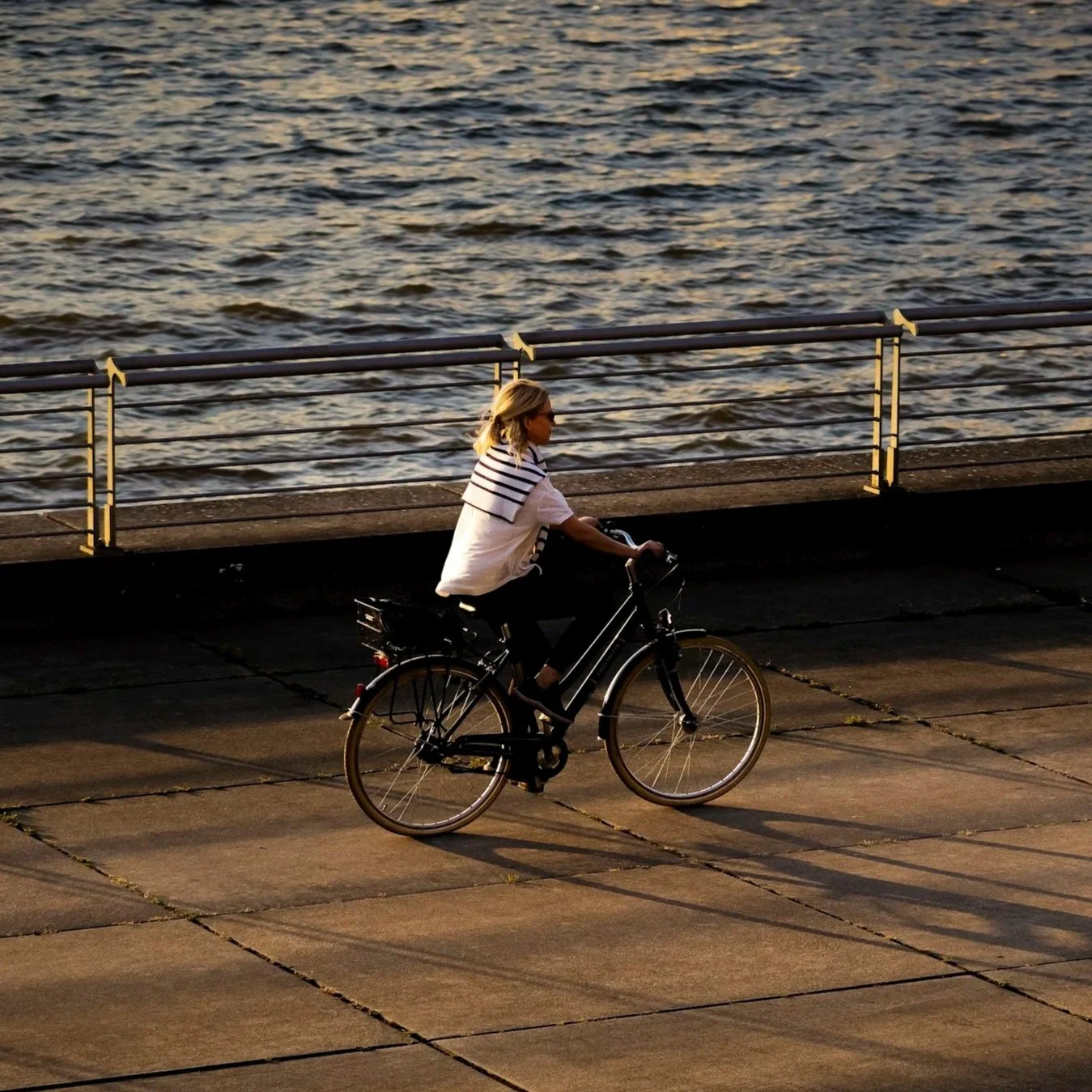
Earlier in my marriage, my husband and I decided to go biking every weekend. After a few rides, he pointed out that I seemed to fall off the bike almost every time. My first reaction was to explain it away—the terrain, the weather, anything that came to mind.
At some point, I chose to pause instead of justify. I took a moment to feel what was happening and to look more closely at my mindset. I truly believed that I didn’t have the balance to ride a bike.
When I reflected further, I thought back to when I first learned. My dad was teaching me. I remember falling several times before being able to ride, and each time he would come running, help me up, and encourage me to try again. It was a supportive experience, but not one I had fully processed. Part of me had concluded that I didn’t have balance, that it had taken me a long time to learn.
There was something else in that pattern, too. Each time I fell, I was picked up. As I reflected, I realized that the dynamic was no longer there as an adult. No one was coming to lift me back onto the bike.
Seeing this made the pattern clearer. The belief I was carrying was not current; it was based on an old experience that had not been fully integrated.
As I allowed myself to revisit and process that memory more completely, the belief began to shift. “I don’t have balance” became “I have balance.”
It did not change overnight. It took a few rides to remind myself and to act from this new understanding. But without holding on to the old belief, my experience on the bike gradually changed as well.
Bringing Mindset and Emotional Balance Together
Mindset and emotional balance are closely connected.
When emotions are not processed, they shape our responses and reinforce certain beliefs. When awareness is absent, these patterns continue without question.
By bringing attention to both the mind and the body, we begin to work with mindset in a more complete way.
We are no longer trying to control thoughts in isolation. We are observing how thoughts, emotions, and bodily responses interact.
From that place, the mindset becomes less rigid. It is no longer something fixed, but something that evolves with awareness.
A Practical Orientation
Transforming our mindset does not require a complete overhaul. It begins with simple observation.
Noticing recurring thoughts and the situations that trigger them.
Recognizing how the body responds in those moments.
Allowing emotions to be felt without immediately turning them into conclusions.
These small shifts change the relationship we have with ourselves.
Over time, they create space for new responses, new perspectives, and new ways of engaging with life.